Water Quality Today: The Hidden Risks You Shouldn't Ignore
Water is part of almost every moment of our lives. From preparing the first cup of tea in the morning to maintaining the operations of large industrial facilities, we depend on water every day. But how often do we stop and ask an important question: What is actually present in the water we use?
Water that looks clear is not necessarily clean or safe. Dissolved minerals, chemicals, heavy metals, and harmful microorganisms can exist without producing any visible changes. These hidden water quality problems may affect health, damage equipment, and increase operating costs.
This is why water quality testing in Sri Lanka is important for households, hotels, commercial buildings, and industrial facilities. Understanding your water quality is the first step towards selecting the right treatment solution and managing water responsibly.
The Reality of Modern Water Sources
Water quality can change over time due to environmental conditions, groundwater characteristics, infrastructure, and human activities. Groundwater sources may be affected by surrounding land use, while ageing pipelines and storage tanks can introduce additional water quality concerns.
Seasonal rainfall, flooding, agricultural activities, and changes in surrounding environments may also influence the characteristics of certain water sources.
As a result, water that previously met the required quality standards may need to be reassessed when conditions change. Regular and appropriate water analysis helps identify these changes and provides information for making informed decisions.
Hidden Water Quality Problems You Should Not Ignore
Some water quality issues develop gradually and may not be immediately noticeable. However, their effects can become visible through plumbing problems, equipment performance, and changes in water characteristics.
1. Scale Build-Up in Pipes and Water Heaters
Hard water contains dissolved calcium and magnesium. Over time, these minerals can form scale deposits inside pipes, water heaters, boilers, and other equipment.
Excessive scaling can reduce heat transfer efficiency, restrict water flow, and increase maintenance requirements. Water hardness testing helps determine whether a suitable water softening solution is needed.
2. Stains on Tiles, Basins, and Laundry
Dissolved iron and manganese can contribute to reddish-brown or dark stains on bathroom fixtures, laundry, and other surfaces. These substances may also affect water appearance and taste.
Identifying the responsible substances through water analysis helps determine the appropriate filtration or treatment process.
3. Corrosion in Plumbing Systems
Water chemistry, including pH and dissolved substances, can influence corrosion in pipes and plumbing components. Corrosion may cause leaks, discolouration, and the release of metals from certain plumbing materials.
Appropriate water testing and system inspection can help identify potential causes and guide corrective measures.
4. Unpleasant Taste and Odour
Changes in dissolved minerals, organic substances, disinfectant levels, or other water characteristics can affect taste and smell. Although unusual taste or odour may indicate a water quality concern, the absence of these signs does not guarantee that water is safe.
5. Reduced Efficiency of Boilers and Cooling Towers
Industrial equipment often requires water with specific chemical and physical characteristics. Hardness, suspended solids, dissolved salts, and other substances can contribute to scaling, fouling, or corrosion.
These problems may reduce equipment efficiency, increase maintenance requirements, and interrupt operations. Appropriate water analysis helps businesses understand their water conditions and treatment needs.
6. Skin and Personal Comfort Concerns
Water characteristics such as hardness and the presence of certain substances may affect bathing comfort. However, skin dryness or irritation can have many causes and should not automatically be attributed to water quality.
Testing can help investigate possible water-related factors when there is a specific concern.
Understanding Your Water Through Professional Analysis
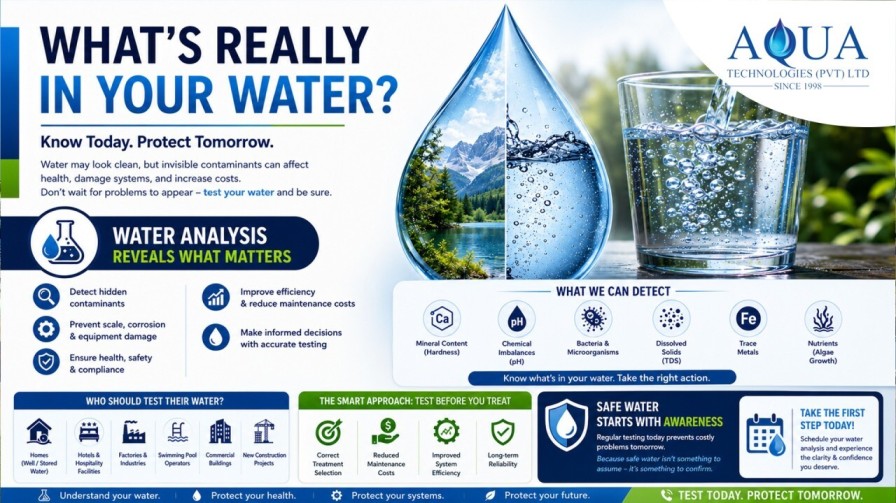
Water analysis is similar to a health check-up for your water supply. It provides information about selected physical, chemical, and microbiological characteristics, helping determine whether the water is suitable for its intended application.
Depending on the source and purpose of the water, testing may include the following parameters:
1. Water Hardness
Measures the concentration of hardness-causing minerals, mainly calcium and magnesium. This helps assess the potential for scale formation in plumbing and equipment.
2. pH Level
Indicates whether water is acidic, neutral, or alkaline. pH is an important parameter when evaluating corrosion potential, treatment performance, and swimming pool water chemistry.
3. Microbiological Parameters
Microbiological testing can identify indicator organisms such as Escherichia coli (E. coli) and other microorganisms that may indicate contamination. This is particularly important when assessing water intended for drinking and food preparation.
4. Total Dissolved Solids (TDS)
TDS indicates the combined concentration of dissolved substances in water. It can provide a general indication of dissolved mineral and salt content, but it cannot identify individual contaminants or confirm that water is safe to drink.
5. Iron and Other Trace Metals
Testing for iron and other selected metals can help identify substances that may cause staining, discolouration, taste problems, or health concerns depending on their concentration and the intended use of the water.
6. Nutrients and Other Chemical Parameters
Depending on the water source, testing may include nitrates, phosphates, and other chemical parameters. These substances can be relevant when investigating agricultural contamination, groundwater quality, or nutrient-related algae growth in certain water environments.
The correct testing scope should always be selected according to the water source, intended application, and relevant water quality requirements.
Who Should Consider Water Quality Testing?
Water quality analysis is valuable wherever water safety, treatment performance, or equipment reliability is important.
Homes Using Well or Borehole Water
Private wells and boreholes can be affected by natural groundwater conditions and nearby environmental activities. Testing helps identify potential chemical and microbiological concerns and determine whether treatment is required.
Hotels and Hospitality Facilities
Hotels depend on water for guest rooms, kitchens, laundry, swimming pools, and other daily operations. Monitoring water quality helps support reliable operations and appropriate water management.
Factories and Industrial Facilities
Industrial processes may require water with carefully controlled characteristics. Water analysis helps identify treatment requirements and monitor water quality for boilers, cooling towers, production processes, and other applications.
Swimming Pool Operators
Swimming pools require regular water quality monitoring to maintain appropriate chemical balance and effective disinfection. Parameters such as pH and disinfectant levels are important for pool operation and swimmer comfort.
Commercial Buildings and New Construction Projects
Commercial buildings and new developments should consider water quality when planning storage tanks, plumbing networks, filtration systems, and other water-related infrastructure. Early assessment can help identify treatment needs before systems become fully operational.
The Smart Approach: Test Before You Treat
Installing a water filtration or purification system without understanding the source water can result in unnecessary expenses or an unsuitable treatment solution.
Different water sources contain different substances, and each treatment technology is designed to address particular water quality concerns. For example, a sediment filter may remove suspended particles, but it will not necessarily remove dissolved salts or harmful microorganisms.
Water analysis helps establish a suitable starting point for treatment planning. Based on the results and intended application, possible treatment technologies may include:
- Sediment filtration: Helps remove suspended particles and physical impurities.
- Activated carbon filtration: Reduces certain substances affecting taste and odour.
- Water softening: Helps reduce hardness caused by calcium and magnesium.
- Reverse osmosis (RO): Reduces many dissolved substances through a specialised membrane process.
- Disinfection systems: Help control harmful microorganisms using suitable treatment methods.
- Specialised filtration: Targets specific contaminants identified through water analysis.
The most suitable solution depends on the analysis results, required water quality, flow rate, operating conditions, and intended use.
Benefits of Regular Water Quality Monitoring
Water quality monitoring should be considered an ongoing part of responsible water management rather than a one-time activity. Appropriate testing can provide several benefits:
- Better-informed decisions: Understand the characteristics of your water before selecting treatment equipment.
- Improved system performance: Identify water-related issues that may affect equipment and infrastructure.
- Reduced maintenance costs: Detect potential scaling, corrosion, and contamination concerns early.
- More reliable operations: Monitor changes in water quality that may affect daily activities and industrial processes.
- Responsible water management: Make informed decisions about treatment, storage, and water use.
Why Choose Aqua Technologies for Water Treatment Solutions?
Aqua Technologies (Pvt) Ltd is a Sri Lankan water treatment solutions provider supporting residential, commercial, and industrial water management requirements.
Our areas of expertise include water treatment systems, swimming pool filtration solutions, and wastewater treatment management. We focus on understanding individual project requirements and identifying suitable solutions based on water quality and operational needs.
Whether you are planning a new water treatment project or looking to improve an existing system, understanding the quality of your water is an important first step.
Safe Water Starts with Awareness
Water quality problems are not always visible. Waiting until an issue becomes obvious can lead to equipment damage, operational difficulties, or potential health concerns.
Appropriate water analysis helps you understand what is present in your water and whether additional treatment is necessary. Regular monitoring also helps identify changes and supports better long-term water management.
Clean and suitable water supports healthier living, protects infrastructure, and improves operational performance. Take the time to understand your water before assuming it is safe.
Frequently Asked Questions About Water Quality
1. Does clear water mean it is safe to drink?
No. Water can contain harmful microorganisms, dissolved chemicals, or metals even when it appears clear. Appropriate water quality testing is necessary to assess whether it is suitable for drinking.
2. Why does water quality change over time?
Water quality can change due to rainfall, flooding, groundwater conditions, surrounding land use, pipeline deterioration, and changes in storage or distribution systems.
3. How often should water quality be tested?
Testing frequency depends on the water source, intended use, previous results, and applicable requirements. Private water sources should be monitored periodically and whenever a change in water quality or contamination concern occurs.
4. Can water analysis help reduce equipment maintenance costs?
Yes. Identifying hardness, dissolved substances, and other water quality issues can help businesses select appropriate treatment methods and reduce avoidable scaling, corrosion, and equipment-related problems.
5. Should I install a water filter before testing my water?
It is generally better to understand the source water quality before selecting a treatment system. Test results help determine which contaminants need to be addressed and which treatment technologies are appropriate.
6. Is TDS enough to confirm drinking water safety?
No. TDS is a general measure of dissolved substances. It does not identify individual contaminants or confirm the absence of harmful microorganisms. A broader assessment is needed to evaluate drinking water quality.
Contact Aqua Technologies (Pvt) Ltd
Want to understand your water quality and explore suitable water treatment solutions? Contact Aqua Technologies to discuss your residential, commercial, or industrial requirements.
Website: www.hydroaqua.lk
Email: [email protected]
Telephone: +94 11 2861 295 / +94 11 2861 296
Aqua Technologies – Delivering Clean Water, One Drop at a Time.