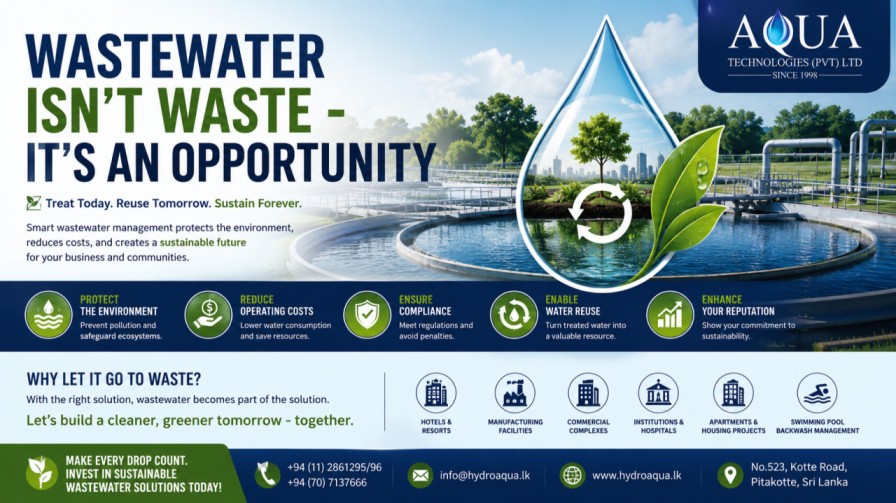
Wastewater Isn't Waste – It's an Opportunity for Sustainable Water Management
Every day, homes, hotels, commercial buildings, and industrial facilities generate wastewater through their daily activities. Traditionally, wastewater has been viewed as something that needs to be removed and disposed of as quickly as possible. However, modern water management takes a different approach: wastewater can be treated, managed, and potentially reused as a valuable resource.
With increasing demand for freshwater and growing environmental concerns, effective wastewater treatment solutions in Sri Lanka are becoming increasingly important. Proper wastewater management helps protect natural water resources, reduce pollution, and support sustainable operations across different industries.
The question is no longer simply how to dispose of wastewater. It is how to treat it efficiently, manage it responsibly, and identify opportunities for safe and beneficial reuse.
Why Is Wastewater Management Important Today?
Population growth, urban development, tourism, and industrial expansion contribute to increasing wastewater generation. When wastewater is discharged without appropriate treatment, it can negatively affect the environment and surrounding communities.
Inadequately managed wastewater can contribute to:
- Groundwater contamination: Pollutants can enter groundwater sources and affect water quality.
- River and coastal pollution: Untreated wastewater can introduce organic matter, nutrients, chemicals, and microorganisms into natural water bodies.
- Unpleasant odours: Decomposition of organic waste under certain conditions can produce offensive smells.
- Public health concerns: Harmful microorganisms and contaminants may create risks for people exposed to polluted water.
- Damage to aquatic ecosystems: Excessive nutrients and organic pollution can reduce dissolved oxygen and negatively affect aquatic life.
- Operational and compliance issues: Poor wastewater management can result in environmental complaints, operational disruption, and difficulties meeting applicable discharge requirements.
Effective wastewater treatment helps reduce these risks by removing or reducing pollutants before treated water is discharged or considered for an appropriate reuse application.
Signs Your Facility May Need Better Wastewater Treatment
Wastewater treatment systems require proper operation and maintenance to perform effectively. Changes in wastewater characteristics, increased loading, equipment problems, or outdated treatment technology can affect system performance.
Consider reviewing your wastewater management system if you notice:
- Strong or persistent unpleasant odours around treatment tanks or discharge areas.
- Excessive or unusual sludge accumulation.
- Frequent drainage blockages or wastewater overflow.
- Difficulty achieving required treated-water quality.
- Increasing freshwater consumption and water-related operating costs.
- Complaints from employees, customers, or nearby communities.
- Frequent equipment breakdowns or an inefficient treatment process.
- An existing treatment plant that no longer meets the facility's requirements.
These signs should not be ignored. A technical assessment can help identify the underlying causes and determine whether maintenance, system upgrades, or a new treatment solution is necessary.
What Can an Effective Wastewater Treatment System Achieve?
A properly designed and operated wastewater treatment plant uses suitable physical, biological, and chemical processes to reduce pollutants in wastewater. The treatment stages depend on the wastewater characteristics and the required quality of the treated water.
Depending on the system design, wastewater treatment can help to:
1. Remove Suspended Solids
Screening, settling, filtration, and other separation processes can remove suspended materials from wastewater. This reduces the solids entering subsequent treatment stages and helps improve overall treatment performance.
2. Reduce Organic Pollution
Biological and other suitable treatment processes help reduce organic pollutants measured through parameters such as biochemical oxygen demand (BOD) and chemical oxygen demand (COD).
Controlling these pollutants is important because excessive organic matter in receiving water bodies can reduce dissolved oxygen and negatively affect aquatic ecosystems.
3. Manage Odour and Microbiological Risks
Appropriate treatment, process control, ventilation, and sludge management can help control unpleasant odours. Where required, suitable disinfection processes can also reduce harmful microorganisms in treated wastewater.
4. Improve Treated-Water Quality
Treatment systems are designed to reduce selected pollutants and achieve the water quality required for the intended discharge or reuse application. Regular monitoring helps assess whether the treatment process is operating as expected.
5. Create Opportunities for Water Reuse
Depending on the treatment level and applicable water quality requirements, treated wastewater may be suitable for selected non-potable applications. This can help reduce demand for freshwater resources.
Who Benefits from Wastewater Treatment Solutions?
Wastewater treatment is important for a wide range of residential, commercial, institutional, and industrial applications. Each facility generates wastewater with different characteristics and therefore requires an appropriate treatment approach.
Hotels and Resorts
Hotels and resorts generate wastewater from guest rooms, kitchens, laundry facilities, restaurants, and other operations. Suitable treatment systems help manage wastewater responsibly and support the environmental management of hospitality facilities.
Manufacturing and Industrial Facilities
Industrial wastewater can contain suspended solids, oils, chemicals, organic pollutants, and other substances depending on the production process. Treatment solutions should be designed according to the wastewater characteristics and applicable discharge requirements.
Commercial Buildings and Complexes
Shopping complexes, offices, and other commercial developments generate wastewater from washrooms, food service areas, and general building activities. Appropriate treatment helps manage wastewater generated by these facilities.
Hospitals and Educational Institutions
Institutions such as hospitals and educational facilities may generate wastewater with different treatment requirements. Their systems should be designed after assessing the wastewater sources, potential contaminants, and relevant treatment standards.
Apartment and Housing Projects
Residential developments with centralised wastewater management systems need reliable treatment solutions to manage wastewater from multiple households and maintain suitable discharge quality.
Swimming Pool Facilities
Swimming pool backwash and filter-cleaning water may contain suspended solids and treatment chemicals. Its management should consider the water characteristics, local discharge requirements, and the design of the drainage or treatment system.
The Smart Approach: Treat, Reuse, and Reduce
Sustainable wastewater management focuses not only on treating wastewater but also on identifying opportunities to use water resources more efficiently.
Where treated-water quality meets the requirements of the intended application, it may be possible to reuse treated wastewater for selected non-potable purposes.
Landscaping and Irrigation
Appropriately treated and monitored wastewater may be suitable for certain landscaping and irrigation applications, subject to relevant quality requirements and safe-use practices.
Cooling Tower Applications
In some industrial and commercial facilities, suitably treated wastewater may be considered as a source of cooling tower make-up water. Additional treatment and monitoring may be necessary to control scaling, corrosion, fouling, and microbiological risks.
Toilet Flushing Systems
Treated wastewater may be reused in appropriately designed non-potable plumbing systems for toilet flushing, provided the required water quality and cross-connection protection measures are maintained.
Cleaning and Utility Applications
Depending on its quality, treated wastewater may be suitable for selected cleaning and utility activities where there is no unacceptable risk to people, products, or the environment.
It is important to remember that treated wastewater is not automatically suitable for every reuse purpose. The required treatment level, testing, monitoring, and applicable approvals must be considered before reuse.
How to Choose the Right Wastewater Treatment System
Selecting a wastewater treatment plant requires more than choosing equipment based on capacity alone. The treatment solution should be designed around the actual wastewater characteristics and the facility's operational requirements.
Important considerations include:
- Wastewater quantity: Average and peak wastewater flow rates.
- Wastewater characteristics: BOD, COD, suspended solids, pH, nutrients, oils, and other relevant parameters.
- Source of wastewater: Whether it comes from residential, commercial, institutional, or industrial activities.
- Required treatment quality: The standards applicable to discharge or the intended reuse application.
- Available space: The site conditions and space available for tanks and equipment.
- Operating requirements: Energy consumption, maintenance needs, operator availability, and equipment reliability.
- Future capacity: Potential changes in wastewater generation as the facility expands.
A proper assessment of these factors helps determine the most suitable treatment technology and system configuration.
Environmental Responsibility Starts with Proper Wastewater Management
Wastewater treatment is not simply an equipment investment. It is an important part of environmental responsibility and sustainable business operations.
Effective wastewater management can help organisations to:
- Reduce the release of pollutants into the environment.
- Protect rivers, groundwater, and coastal ecosystems.
- Use freshwater resources more efficiently through suitable reuse.
- Improve operational reliability and wastewater management practices.
- Support compliance with applicable environmental requirements.
- Demonstrate a commitment to responsible resource management.
In Sri Lanka, wastewater treatment and discharge requirements should be assessed against the applicable environmental laws, permits, and standards. Facilities should obtain the necessary technical advice and approvals for their specific operations.
Why Choose Aqua Technologies for Wastewater Treatment Solutions?
Aqua Technologies (Pvt) Ltd is a Sri Lankan water treatment solutions provider supporting residential, commercial, and industrial water management requirements.
Our areas of expertise include water treatment systems, wastewater treatment solutions, and swimming pool filtration systems. We focus on understanding each project's requirements and identifying suitable solutions based on wastewater characteristics, site conditions, and operational needs.
Whether you are planning a new wastewater treatment plant, improving an existing system, or exploring treated-water reuse opportunities, a proper assessment is an important first step.
Turn Wastewater into an Opportunity
Wastewater should not be viewed only as something that needs to be discarded. With appropriate treatment and responsible management, it can become part of a more sustainable approach to water use.
From protecting natural water resources to reducing freshwater demand, effective wastewater treatment can create environmental and operational benefits for homes, businesses, and industries.
The first step is understanding your wastewater, identifying the right treatment requirements, and selecting a system designed for long-term performance.
Frequently Asked Questions About Wastewater Treatment
1. What is wastewater treatment?
Wastewater treatment is the process of removing or reducing physical, chemical, and biological contaminants from wastewater so that the treated water can be safely discharged or considered for an appropriate reuse application.
2. Why is wastewater treatment important?
Wastewater treatment helps reduce pollution, protect public health, safeguard aquatic ecosystems, and support responsible water management. It also helps facilities manage their wastewater in accordance with applicable requirements.
3. Can treated wastewater be reused?
Yes. Depending on the treatment process and resulting water quality, treated wastewater may be reused for certain non-potable applications, such as landscaping, irrigation, toilet flushing, and selected industrial utilities. The required quality and safety measures depend on the intended use.
4. What industries need wastewater treatment systems?
Hotels, resorts, manufacturing facilities, commercial buildings, hospitals, educational institutions, and residential developments may all require wastewater treatment systems. The specific solution depends on wastewater quantity and characteristics.
5. What are the common signs of a wastewater treatment problem?
Common warning signs include persistent unpleasant odours, excessive sludge accumulation, frequent blockages, overflow, equipment breakdowns, and changes in treated-water quality.
6. How do I select the right wastewater treatment plant?
The selection process should consider wastewater flow, pollutant characteristics, required treated-water quality, available space, operating costs, and future capacity. A technical assessment helps identify a suitable system.
7. Does wastewater treatment help reduce water consumption?
It can. When treated wastewater meets the quality requirements for a suitable non-potable application, reusing it can reduce the demand for freshwater.
Contact Aqua Technologies (Pvt) Ltd
Looking for reliable wastewater treatment solutions in Sri Lanka? Contact Aqua Technologies to discuss your residential, commercial, or industrial wastewater management requirements.
Website: www.hydroaqua.lk
Email: [email protected]
Telephone: +94 11 2861 295 / +94 11 2861 296
Aqua Technologies – Delivering Clean Water, One Drop at a Time.